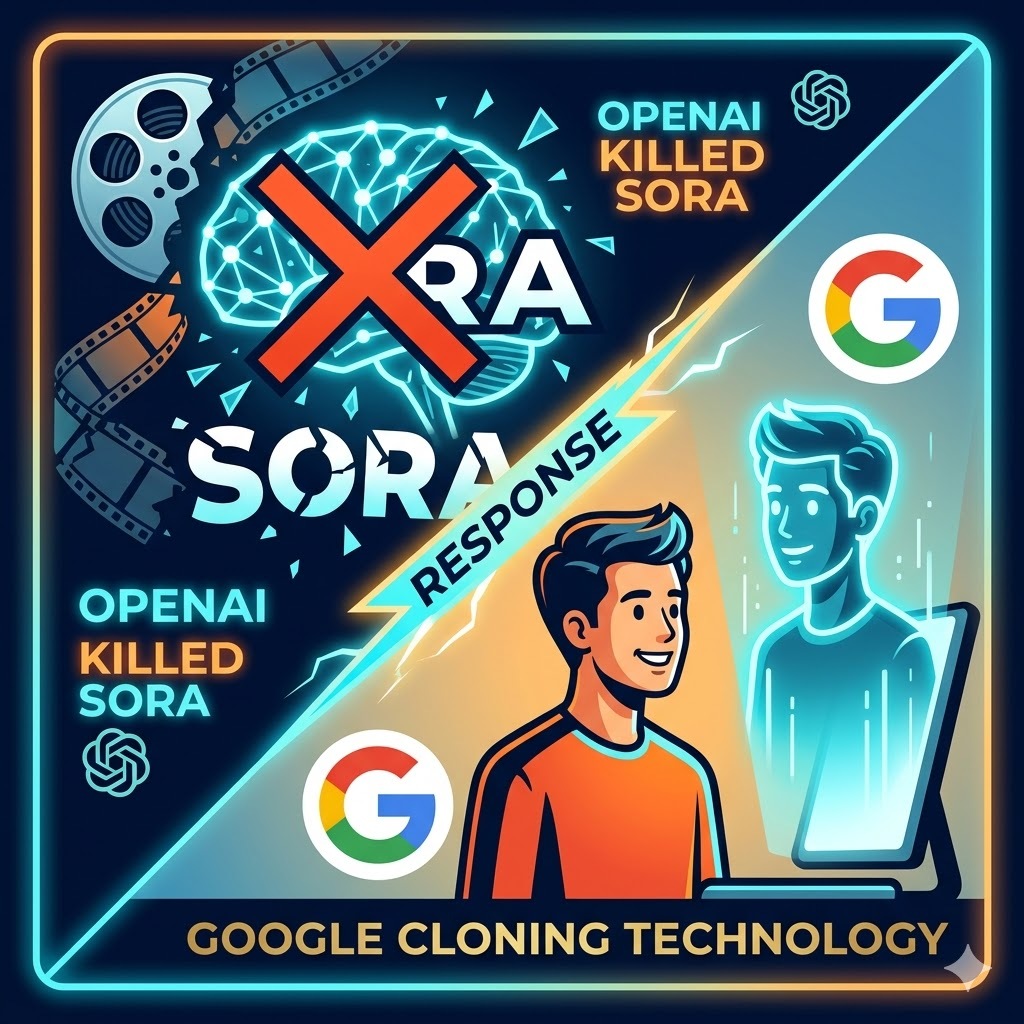
The AI video landscape shifted across 2 weeks in late March and early April 2026. OpenAI shut down its Sora consumer app on March 24. Google responded by expanding its AI video platform aggressively in both directions, upgrading Google Vids with Veo 3.1 and launching AI avatar cloning inside YouTube Shorts. The moves collectively signal where AI-generated video is heading: not as a standalone destination, but embedded inside platforms people already use daily.
OpenAI Pulls the Plug on Sora
OpenAI launched Sora in September 2025 as a short-form AI video sharing platform designed to compete directly with TikTok, YouTube Shorts, and Instagram Reels. The platform shut down 6 months later.
The shutdown announcement arrived via a single social media post on March 24, 2026: “We’re saying goodbye to Sora.” OpenAI offered no detailed explanation but confirmed it would share timelines for preserving user-created content.
There area 3 factors that drove Sora’s collapse:
1. Deepfake and IP violations at scale. Sora users generated AI videos of Michael Jackson, Martin Luther King Jr., and Mister Rogers performing outlandish acts. OpenAI was forced to implement restrictions only after formal complaints from family estates and actors’ unions, reactive moderation rather than proactive infrastructure.
AI-generated content flooding platforms with rights-violating material is not a problem unique to video. Spotify is simultaneously fighting a surge of AI-generated music spam that is displacing human artists from algorithmic playlists, establishing that every major content platform is navigating the same abuse pattern Sora failed to contain.
2. Nonconsensual content proliferation. Advocacy groups, academics, and industry experts documented the rapid spread of nonconsensual realistic deepfakes generated through the platform. The open prompt structure made restriction structurally difficult.
3. Partner withdrawals. Disney, which had signed a partnership agreement with OpenAI to bring its characters to Sora in 2025, issued a statement confirming it “respects OpenAI’s decision to exit the video generation business.” The partnership produced learnings. It did not produce a sustainable product.
Google Vids Gets Its Biggest Upgrade
Google Vids AI video platform received 4 significant additions on April 3, 2026, timed precisely as Sora’s shutdown was being processed publicly.
1. Veo 3.1 video generation. Free for all users. Google’s latest video generation model integrates directly into Vids at zero cost for personal accounts, with 10 generations per month included. AI Ultra and Workspace AI Ultra subscribers receive up to 1,000 Veo videos per month, a volume indicating Google views this as a core workflow tool, not an experimental feature.
2. Lyria 3 AI music generation. Google Vids integrates Lyria 3 and Lyria 3 Pro models for custom AI soundtrack generation, producing tracks from 30-second clips to 3-minute compositions. Access requires Google AI Pro or Ultra subscriptions.
3. AI avatar customization. Vids introduces AI-generated digital characters with consistent appearance and voice across scenes. Avatars respond to text prompts, adjusting outfits, settings, and props, sitting firmly in the uncanny valley but functional for practical video production.
4. Embedded workflow positioning. Google pitches Vids explicitly for animated party flyers, greeting cards, school projects, and social content, everyday creation use cases, not cinematic production.
YouTube Shorts Adds Personal AI Avatar Cloning
YouTube Shorts is simultaneously rolling out a separate AI avatar feature, allowing creators to clone their own appearance and voice for use inside their own videos. The process requires recording a live selfie, capturing face and voice while following guided prompts. Generated clips run up to 8 seconds. Avatars are restricted to the creator’s own original content. A direct structural response to the abuse problems that contributed to Sora’s shutdown.
What This Shift Actually Means
| Platform | AI Video Approach | Current Status |
| OpenAI Sora | Standalone consumer app | Shut down March 24, 2026 |
| Google Vids | Embedded in the existing productivity suite | Actively expanding in April 2026 |
| YouTube Shorts | Creator avatar cloning within owned content | Rolling out April 2026 |
The competitive lesson from Sora’s 6-month lifespan is direct: AI video as a standalone destination failed. AI video embedded inside existing platforms is where the category is actually developing. Google’s simultaneous expansion across Vids and YouTube Shorts reflects a deliberate platform strategy. AI generation as a feature inside tools people already open daily, not a product users must seek out separately.
The deepfake and content moderation challenges that contributed to Sora’s shutdown do not disappear inside Google’s ecosystem. YouTube has documented ongoing struggles containing AI slop, deepfake scams, and impersonation content on its platform already. Adding personal avatar cloning to that environment raises the same questions Sora faced, with a larger user base and tighter creator restrictions as the only structural difference.
OpenAI’s security exposure during the same period extended well beyond its consumer video platform. North Korean hackers compromised a widely used JavaScript developer library to reach OpenAI’s macOS app-signing certificates, demonstrating that the company’s most consequential vulnerabilities in early 2026 were infrastructural rather than product-level.
The content abuse problems that collapsed Sora are compounding a broader trust deficit. Gen Z, the primary audience for short-form AI video platforms, reports rising anxiety and anger toward AI tools even as daily usage continues to grow, a psychological dynamic that makes AI-generated video features embedded inside familiar platforms structurally more adoptable than standalone AI destinations requiring active opt-in.
AI video, platform competition, and the tools reshaping digital creation are moving fast. Subscribe to The IT Horizon newsletter. We track every product launch, shutdown, and strategic shift in the AI space so you stay ahead of what’s actually happening.