
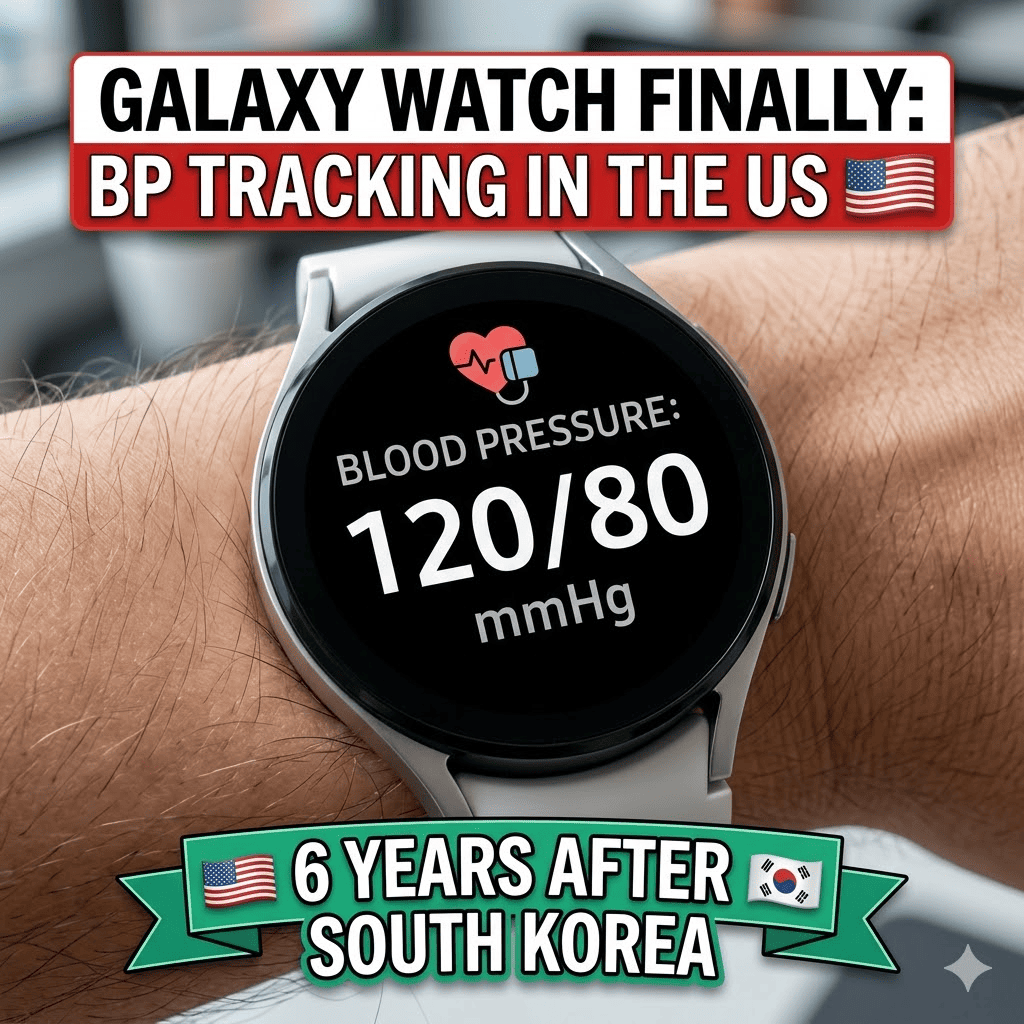
Samsung begins rolling out blood pressure monitoring to Galaxy Watch users in the United States on March 31, 2026, 6 years after the same feature launched in South Korea in 2020. The feature tracks systolic blood pressure, diastolic blood pressure, and heart rate simultaneously from the wrist, and is available on Galaxy Watch 4 through Galaxy Watch 8 series models running WatchOS 4.0 or higher. The rollout is phased, meaning not all eligible users receive it on the same day.
Why US Galaxy Watch Users Waited 6 Years
Blood pressure measurement sits in a regulatory grey zone in the United States. The FDA classifies blood pressure monitoring as a medical device function. A category requiring clinical validation, regulatory review, and formal clearance before any company can offer it to US consumers as a consumer product.
Samsung could not meet that bar for blood pressure specifically, despite clearing 2 other health features through the FDA: the Sleep Apnea detection feature, which received FDA authorization as the first of its kind, and the ECG and Irregular Heart Rhythm notification features, both of which received FDA clearance. Blood pressure proved harder to clear, so Samsung took a different route.
Samsung now offers blood pressure monitoring in the US by classifying it as a wellness feature rather than a medical device. This classification means Samsung is not claiming the feature diagnoses, treats, or prevents high blood pressure. It is positioned as a personal health awareness tool. Whoop used the same regulatory approach in 2025 to offer a similar capability on its fitness tracker. The wellness classification is what unlocked the US rollout after 6 years of waiting.
Who Needs This Feature and Why It Matters
119.9 million adults in the United States, nearly 50% of all US adults, had high blood pressure in 2025, according to the Centers for Disease Control and Prevention. High blood pressure is a leading risk factor for heart disease and stroke, the 2 leading causes of death in the United States.
The monitoring gap is behavioral, not medical. Most people with high blood pressure do not track it daily because traditional upper arm cuff devices are stationary, inconvenient, and require deliberate effort to use. Galaxy Watch’s wrist-based monitoring addresses this compliance problem directly; a blood pressure reading becomes as passive as checking the time, removing the friction that causes most hypertension patients to monitor inconsistently.
How Blood Pressure Monitoring Works on Galaxy Watch
Galaxy Watch blood pressure monitoring operates across 3 steps.
Step 1: Download the Samsung Health Monitor App
Download the Samsung Health Monitor app on a compatible Galaxy phone running Android 12 or higher. The app becomes available for download automatically once the Galaxy Watch connects to the phone.
Step 2: Calibrate with an Upper Arm Cuff
Calibrate the Galaxy Watch using a traditional upper arm blood pressure cuff, sold separately, before taking the first reading. The watch’s internal heart rate sensor estimates blood pressure by calibrating its readings against the cuff’s baseline measurement. Recalibration repeats every 28 days, with 13 mandatory sessions per year. Users who already own a traditional blood pressure monitor carry no additional hardware cost. Users who do not must purchase a cuff separately to use the feature at all.
Step 3: Take Readings and Review Data
Take blood pressure readings directly from the wrist after calibration is complete. The Samsung Health app stores every reading, displays systolic and diastolic values alongside heart rate, and provides a brief contextual summary after each measurement, similar to the review blurb delivered after an ECG reading.
Active Monitoring Now, Passive Monitoring Later in 2026
Blood pressure monitoring currently requires the user to initiate each reading manually. The watch measures on demand, not continuously. Samsung introduces passive blood pressure trend monitoring later in 2026, which tracks blood pressure changes automatically in the background and surfaces trends over time without requiring the user to start a measurement session.
Active monitoring gives users immediate, on-demand readings. Passive monitoring gives users a longitudinal picture of how blood pressure shifts across days and weeks. The more clinically meaningful data pattern for identifying hypertension trends early. Users deciding whether to adopt the feature now or wait for the passive version should consider that active monitoring still delivers meaningful daily awareness, while passive monitoring adds the trend context that makes the data actionable over time.
Samsung’s 4-Feature Health Monitoring Platform
Blood pressure monitoring joins existing health features on Galaxy Watch, completing a cardiovascular and sleep health suite that no single competing smartwatch currently matches across all 4 capabilities.
| Health Feature | FDA Status | Age Requirement |
| Blood Pressure Monitoring | Wellness classification (not medical) | Not specified |
| Sleep Apnea Detection | FDA authorized | 22 years and older |
| ECG Readings | FDA cleared | 22 years and older |
| Irregular Heart Rhythm Notifications | FDA cleared | 22 years and older |
Apple Watch Series 10 offers ECG and irregular heart rhythm detection, but does not offer blood pressure monitoring. Garmin Venu 4 tracks blood oxygen saturation but not blood pressure. Withings ScanWatch 2 offers blood pressure monitoring with cuff calibration, the closest functional equivalent, but without Samsung Health’s integrated 4-feature platform.
Galaxy Watch is the only mainstream smartwatch available in the US that combines all 4 health monitoring capabilities inside a single device.
Which Galaxy Watches Support Blood Pressure Monitoring
Blood pressure monitoring supports Galaxy Watch 4 through Galaxy Watch 8 series, covering every Samsung smartwatch released between 2021 and 2025. Galaxy Fit models are excluded. The Galaxy Watch 8 series, including Galaxy Watch 8 Classic and Galaxy Watch 8, is available now on Samsung.com and receives the feature first in the phased rollout. Older models from Galaxy Watch 4 onward receive the update progressively. Check the Samsung Health Monitor app for availability on your specific model.
Final Words
Blood pressure monitoring’s US arrival closes a 6-year gap that left Samsung’s most health-conscious feature locked behind a regulatory barrier its competitors were navigating differently. The 28-day calibration requirement is a friction point, and the passive trend monitoring arriving later in 2026 will make the feature genuinely more powerful than its current active-only form. For the nearly 50% of US adults living with high blood pressure, a wrist-based daily awareness tool, even an imperfect one, is more useful than a cuff sitting unused in a drawer.
The tech world moves fast. Our newsletter keeps you faster, covering everything from tech updates, product launches, industry deals, and more, to the stories most people miss. Subscribe and never fall behind.