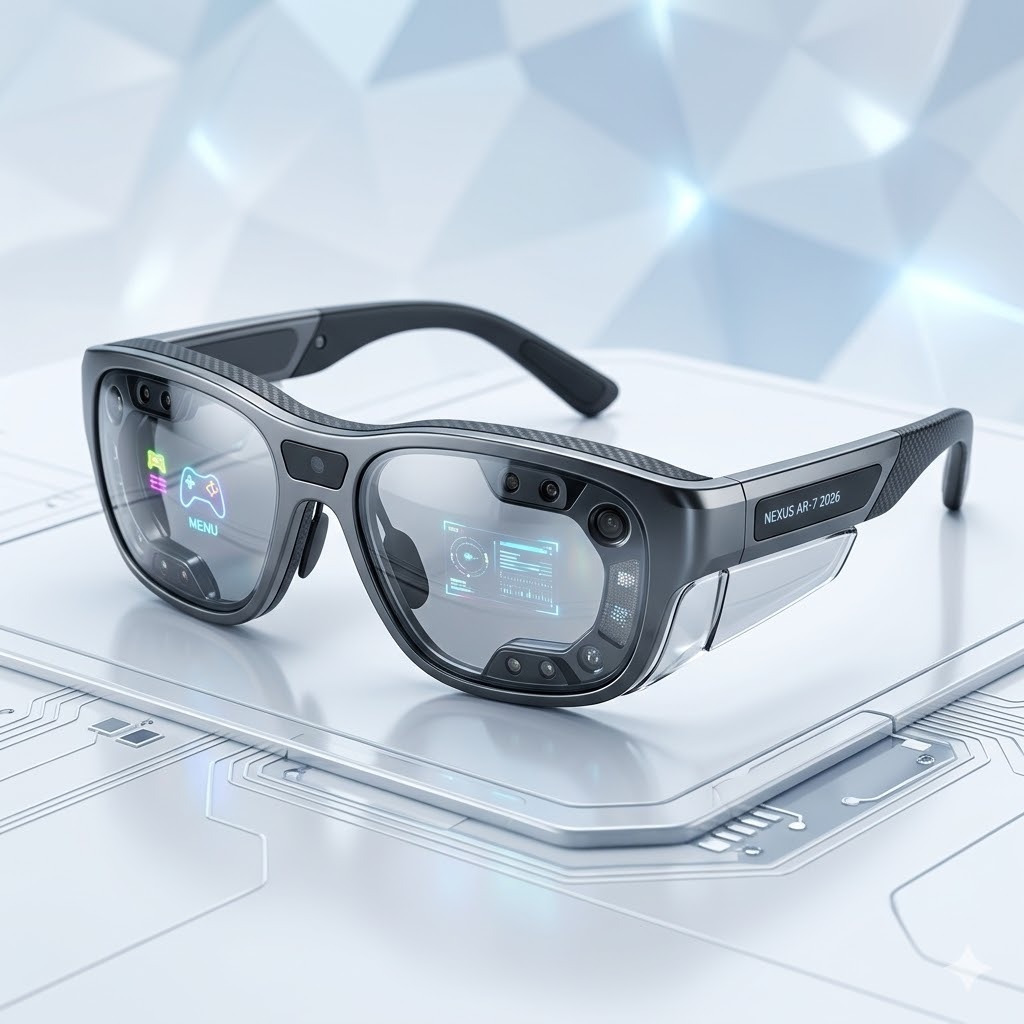
AR gaming glasses are wearable displays that let you see a large virtual screen only you can see, without a physical monitor. Smart glasses have reached a genuinely useful stage in 2026. After testing 3 of the most popular models currently available, the verdict is clear: no single pair does everything perfectly, but each does specific things well enough to be worth recommending to the right buyer.
This guide covers what AR glasses actually are, the 3 models tested head-to-head, the Switch 2 compatibility situation, and what is coming next that might change everything.
What AR Display Glasses Are and the 2 Types You Need to Know
AR display glasses are wearable screens. You put them on, connect them to a phone, tablet, laptop, or gaming handheld via USB-C, and see a large virtual display that only you can see, like having a private cinema or monitor that travels with you.
There are 2 fundamentally different types, and they are not interchangeable.
1. Prism glasses use large curved lenses to project a big, bright, high-resolution image, equivalent to watching a large TV or cinema screen. The Xreal One Pro, for example, projects a 1,920 x 1,080 image across a 57-degree field of view. Prism glasses are wired, require you to sit down, and are not designed for walking around. They are the better choice for most buyers right now.
2. Waveguide glasses use flat lenses with microscopic etched patterns to overlay small amounts of information directly in your line of sight, like a heads-up display. They are designed for wearing while moving around. Most current waveguide glasses project only in green (monochrome), because green is the easiest wavelength to project efficiently through current waveguide optics. Colour waveguide displays exist but require larger, bulkier projectors, making the glasses visibly bigger and harder to pass off as regular eyewear.
What is 3DoF? Three degrees of freedom means the virtual screen appears fixed in space; if you turn your head left, the screen stays where it was rather than following your gaze. Without 3DoF, every head movement causes the screen to wobble, producing motion sickness in most users. 3DoF is now standard on all 3 models tested and is non-negotiable for comfortable use.
The 3 Models Tested: Quick Specifications
The following 3 models cover the current mainstream AR glasses market across 3 price points. All 3 use similar Sony micro-OLED screens. The differences come from optics, audio, build quality, and software.
The 3 models tested span a $200 price range, with an 11-gram weight difference between lightest and heaviest, and meaningful differences across 6 key specifications.
| Specification | Xreal 1S | Xreal One Pro | Viture Beast |
| Price | $449 | $649 | $549 |
| Weight | 85g | 91g | 96g |
| Verge Score | 7/10 | 8/10 | 6/10 |
| Optics | Birdbath | Flat (premium) | Flat |
| Audio Tuning | Bose | Bose | Harman |
| Buttons | 4 | 4 | 6 |
| 3DoF Screen Lock | Yes (solid) | Yes (solid) | Unreliable |
| Switch 2 Support | Needs a separate dock | Needs a separate dock | Via $130 dock |
| Best At | Comfort + value | Picture + sound | Contrast + blacks |
| Worst At | Reflections | Price | Build quality + 3DoF |
Head-to-Head: What Each Model Does Best
1. Xreal 1S: Best for Comfort and Value
The Xreal 1S delivers the best overall value of the 3 models at $449. The lightest pair at 85 grams with the same Bose-tuned audio as the $649 One Pro. Its 4-button layout along the right temple arm has a lower learning curve than the Beast’s 6-button spread across both arms.
Key strengths:
- Lightest weight: 85 grams.
- Bose-tuned audio: Best low-end performance of the 3.
- Best build quality at its price: Metal hinges, premium feel.
- Lowest learning curve: 4 buttons, right temple only.
Key weaknesses:
- Birdbath optics cause significant reflections in bright rooms.
- Blacks appear washed out in daylight, looking like an LCD rather than an OLED.
- The image appears slightly blurrier than the other 2 models.
Xreal One Pro: Best Overall
The Xreal One Pro earns its $649 price through flat, high-end optics that eliminate reflections almost entirely. The single biggest upgrade over the 1S. Picture quality is excellent, audio is identical to the 1S, and build quality is class-leading.
Key strengths:
- Flat optics eliminate reflections: Looks great in any lighting condition.
- Same Bose audio as the 1S.
- Best 3DoF implementation: Screen stays completely fixed.
- Ultrawide mode at 3,840 x 1,080 when connected to a computer.
Key weaknesses:
- $649 price – $200 more than the 1S for optics improvement primarily.
- Contrast is slightly less rich than the Viture Beast.
Viture Beast: Best Contrast, Worst 3DoF
The Viture Beast delivers the best picture contrast of the 3 models. Inky blacks and rich highlights that match a quality OLED TV. However, its 3DoF implementation is a genuine deal-breaker: the “anchored” screen slowly slides out of view during use, defeating the core function of the feature.
Key strengths:
- Best contrast and black levels of the 3 models.
- Flat optics: Minimal reflections.
- Switch 2 compatibility via the $130 Pro Mobile Dock.
Key weaknesses:
- 3DoF screen slowly slides: Unreliable anchoring.
- Heaviest at 96 grams.
- Harman audio: Weaker low end than Bose-tuned Xreal models.
- Thicker temple arms cause more ear strain.
- 6 buttons across both arms: Higher learning curve.
The Switch 2 Compatibility Problem No One Talks About
No AR glasses currently connect to Nintendo Switch 2 via a single USB-C cable. The reason is specific: Switch 2’s video output uses a proprietary protocol rather than standard DisplayPort-over-USB-C, which all 3 pairs of glasses require. An intermediary device is mandatory.
For Viture Beast owners, Viture’s $130 Pro Mobile Dock solves this cleanly:
- Works perfectly with Switch 2.
- Includes a 13,000 mAh battery for charging during play.
- Full HDMI port for connecting other consoles.
For Xreal owners, the situation is more complicated. Xreal announced the Neo Dock at CES 2026 specifically to solve this problem, but cancelled it before launch due to reliability concerns. Xreal owners currently need a third-party dock, none of which are officially recommended.
Xreal’s Real3D Feature: Better Than Expected in Small Doses
Xreal glasses equipped with the X1 chip, all models launched in the past 2 years, include Real3D mode, which converts 2D content into 3D using a software slider with multiple intensity levels. The mildest setting produces a subtle but genuinely noticeable depth effect. It works best in slow-moving games and is not as pronounced as the Nintendo 3DS effect, but the improvement is real and adds value for compatible content.
Who Should Buy Which Model
The right AR glasses depend on 4 specific buyer scenarios:
- Best value pick for most buyers: Xreal 1S. lightest, best audio, lowest price, solid build quality. Accept the reflection weakness in exchange for the $200 saving over the One Pro.
- Best overall if budget allows: Xreal One Pro. Flat optics eliminates the 1S’s primary weakness. The $649 price is justified if you use the glasses in varied lighting conditions.
- Best for Nintendo Switch 2 owners: Viture Beast + $130 dock. The only complete Switch 2 solution currently available. The 3DoF weakness is real but acceptable if Switch 2 compatibility is the primary use case.
- Not recommended for most buyers: Viture Beast without Switch 2. The sliding 3DoF implementation makes it the weakest general-use option of the 3.
What Is Coming Next
The current AR glasses market will look significantly different within 2 years. The following 3 platforms represent the near-future of the category, each with different strengths, current status, and expected timelines.
The 3 incoming platforms cover the full spectrum from open developer ecosystems to closed premium hardware, with field-of-view ranges varying from 20 degrees to 46 degrees.
| Platform | Key Strength | Display Colour | Current Status | Expected Timeline |
| Android XR (Google) | Open app ecosystem, developer third-party support | Colour | Developer kits only | TBD, hardware unannounced |
| Snap OS 2.0 | 46-degree field of view widest tested | Colour | Developer hardware only | “Lightweight” model announced for 2026 |
| Apple Glasses (rumoured) | Apple ecosystem integration | Unknown | Unconfirmed | Unknown |
Android XR is the most promising of the 3 for long-term value. Google’s track record with Android, Google TV, and Wear OS demonstrates its ability to build open platforms that attract developers and ensure app compatibility across multiple manufacturers. If Android XR follows the same model, it could do for AR glasses what Android did for smartphones.
Final Takeaway
AR gaming glasses in 2026 are genuinely useful; the Xreal 1S and One Pro are comfortable, well-built, and impressive as portable displays. But every current model has at least 1 meaningful compromise.
Buy the Xreal 1S or One Pro if portable display quality and comfort are the priority. Buy the Viture Beast if Switch 2 compatibility matters most. Wait for Android XR or Snap OS if you want the complete version of this technology. It is closer than it has ever been, but it is not here yet.
Wearable technology, gaming hardware, and the gadgets reshaping how we interact with digital content, our newsletter covers every release worth knowing about. Subscribe and stay ahead.