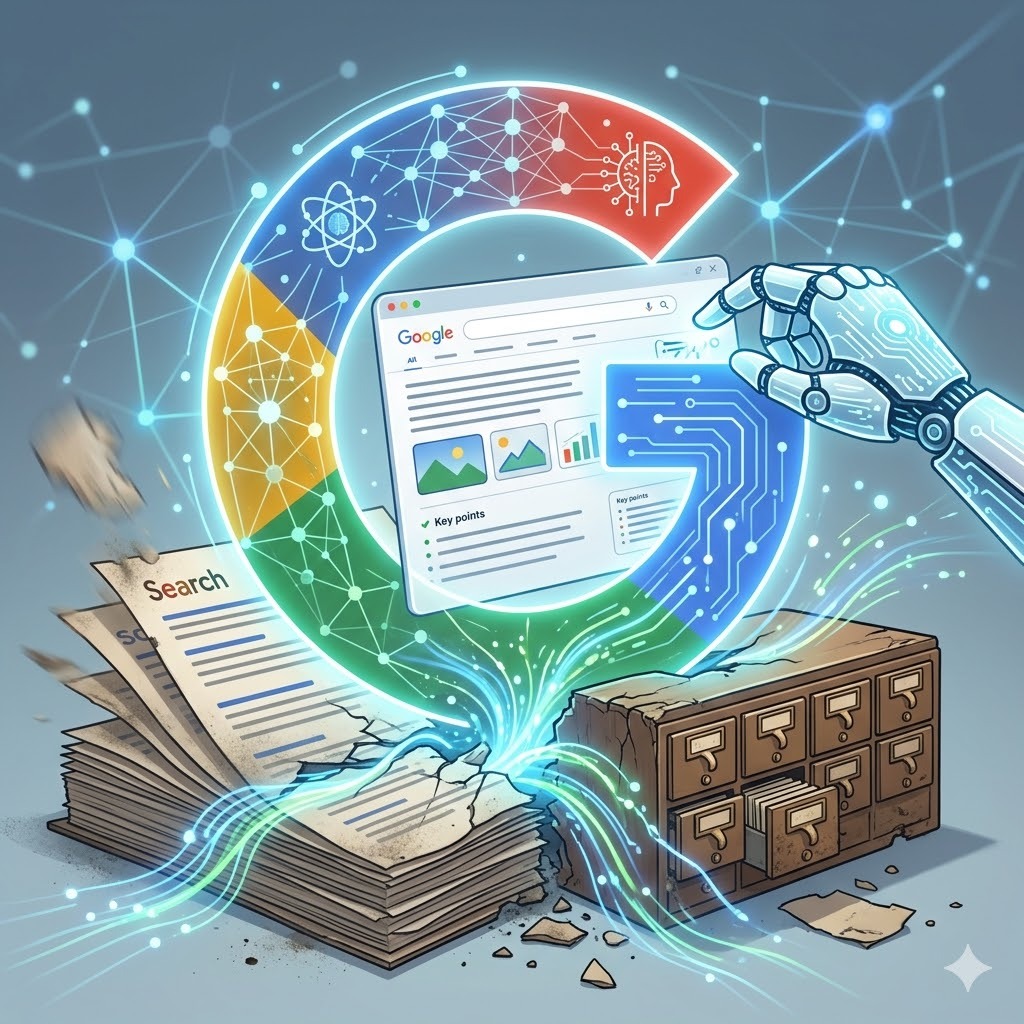
Google’s AI-centric search transformation is the most significant structural overhaul of the world’s largest search engine in 27 years. The goal is direct: replace the traditional ranked list of 10 blue links with conversational, AI-generated answers powered by the Gemini model. As of April 2026, the traditional search results page is actively being dismantled. Not announced for the future, not in limited testing, but in live deployment across global markets.
When a Reddit April Fools post claimed Google would retire traditional search in 3 weeks, 283 SEO professionals panicked before checking the date. That reaction alone tells you everything about where search is heading.
The 4 Active Features Replacing Traditional Search Results
Google AI-centric search operates through 4 deployed features already live as of April 2026, each systematically reducing the role of the traditional blue-link results page.
| Feature | Primary Function | Direct Effect on Users |
| AI Overviews | AI-generated answer summaries at the top of the results | Delivers complete answers before website links appear |
| AI Mode | Conversational handling of complex, multi-part queries | Replaces multi-tab research sessions with single responses |
| Multimodal Search | Simultaneous text, voice, and image query processing | Expands searchable inputs beyond typed keywords |
| Generative Engine Optimization | New content standard targeting AI summary inclusion | Replaces traditional keyword ranking as the primary SEO goal |
AI Overviews represent the most immediate publisher impact. Complete answers appearing above all organic results suppress click-through rates directly, transferring information value from the source website to Google’s AI response layer.
How User Behavior Is Shifting Inside Google Search?
Google AI search is changing not just what results look like, but how users construct their queries. Users are now submitting longer, more complex, multi-part questions, behavior previously reserved for conversational AI platforms like ChatGPT and Perplexity. AI Mode accommodates this shift by processing layered queries the way a knowledgeable assistant would, rather than matching keywords to indexed pages.
The single-keyword search is becoming a legacy behavior. Query complexity is rising because AI Mode rewards specificity with more accurate, comprehensive answers. Users asking “best running shoes” now ask “best running shoes for flat feet under $150 for half marathon training“, and Google’s Gemini model delivers a direct, personalized response without routing the user through 10 separate review websites.
What This Means for Publishers, SEO, and Advertising?
Google’s AI search transition creates 3 simultaneous disruptions for anyone who depends on organic search traffic.
1. Publisher Traffic Collapse: Fewer clicks reach publisher websites when AI Overviews deliver complete answers at the top of the page. Traffic loss is not a projected risk. It is a documented present-tense outcome for publishers whose content gets absorbed into AI summaries without generating a click.
2. SEO Replaced by GEO: Traditional SEO is giving way to Generative Engine Optimization, the emerging discipline of structuring content to appear as a cited source inside AI-generated answers. GEO requires demonstrable first-hand experience, verifiable factual depth, and genuine information gain, 3 qualities that bulk AI content structurally cannot produce at scale.
3. Advertising Model Restructured: Google’s advertising model is simultaneously adapting, embedding ads directly inside AI-driven search responses rather than alongside ranked website listings. The monetization infrastructure is following the content layer into the AI environment.
The Competition Accelerating Google’s Timeline
Google’s AI search expansion is partly a defensive response to losing query share to Perplexity and ChatGPT. Both platforms capture search intent that previously defaulted exclusively to Google, particularly research queries, comparison queries, and complex multi-step questions. Google’s aggressive 2026 deployment timeline reflects competitive pressure as much as internal product vision.
The irony is not subtle. Google built the information economy that made SEO a profession. Now Google’s own AI layer is absorbing the answers that once required visiting the websites that the economy produced. One Reddit commenter, reacting to what they thought was a genuine retirement announcement, put it plainly: “I hate April Fools because tech companies would totally do this if they could.” Google’s response, functionally, is: watch us.
What Content Strategy Survives the Transition?
Content surviving Google’s AI-centric search environment demonstrates 3 non-automatable qualities. First-hand experience signals to Gemini that a human with direct subject knowledge produced the content. Topical authority across semantically clustered queries gives Google sufficient context to treat a source as citable within AI Overviews. Contextual backlinks from relevant domains establish the trust signals that no content generation platform can produce automatically.
Generic keyword content without these 3 foundations either gets summarized without attribution or excluded from AI responses entirely. The organic click no longer flows to ranked pages by default. It flows to sources Google’s AI deems worth citing, or it stays inside the answer and never reaches a website at all.
Google’s search transformation is moving faster than most content teams are prepared for. Subscribe to The IT Horizon newsletter, and we track every shift in AI search, GEO strategy, and what actually survives the transition before it costs you traffic.